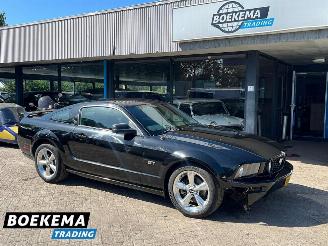
A Mustang with damage rarely stays on sale for long, and usually not where you are looking. That is why on this page we bring together what our affiliated car dealers, traders and dismantling companies are currently offering, from the Netherlands and beyond. That saves you a long round of separate used-car sites. Filter by year of manufacture, trim level or type of damage and contact the seller yourself.
The stock follows our partners' purchasing and changes daily, so not every version is listed at all times. Roughly three kinds of Mustang are on the road in the Netherlands: the generation that Ford officially sold here, the models that arrive as imports from the United States, and the classics. The three differ greatly in value and in how easily you can get parts.
With this generation the Mustang officially came to Europe for the first time, with the steering wheel on the correct side and an independent rear axle. You choose between the 2.3 EcoBoost with 317 hp and the 5.0 V8 of the GT, which started at 421 hp and later went up to 450 hp. There are also special series such as the Bullitt and the Mach 1.
These cars make up the largest part of the stock. On the GT, look at the condition of the clutch and the tyres: a Mustang that has lived hard shows it at the rear axle.
In Europe the newest generation sticks with the 5.0 V8, good for well over 440 hp, with the Dark Horse as the sharpest version. Inside are two large screens, housed together under a single sheet of glass.
These examples are still young and rarely turn up. When one does, it is usually a car with light collision damage and a low mileage, but with expensive electronics on board.
With this generation, also check the two screens behind the glass panel. A crack in it adds up quickly and it cannot be replaced separately.
Many Mustangs in the Netherlands have been privately imported. That produces a mixed picture: from a 2008 V6 coupé to a fastback from the 1960s that is in need of restoration. The Shelby and Roush versions also turn up now and then.
With an import, the paperwork counts for as much as the car itself. Always ask for the import documents and check that the vehicle is registered in the Netherlands.
We do not keep fixed lists. You specify what your Ford Mustang salvage car has to meet and then see straight away whether there is anything suitable in stock at the moment:
Nothing found today? Come back next week. Save your search or bookmark this page and check back regularly; as soon as a partner lists one, you will see it straight away.
Does a car appeal to you? In the advert you will find extensive photos and the full damage description, and from there you contact the seller directly.
A rear-wheel-drive sports coupé is assessed on different points from a family car. Four topics decide whether you have a bargain or a liability on your hands.
A Mustang often takes its knocks at the rear. So look at the suspension, the rear axle and the floor pan under the boot. Misaligned wheels or a damaged subframe mean straightening work on a frame bench, and that is quite different from replacing a panel.
Also look at the wheels and the brakes. The GT sits on wide tyres with large discs, and a single knock against the kerb quickly costs a few hundred euros per wheel here.
Body panels for the Mustang almost always come from the United States. That gives you choice, but also shipping and import costs and a delivery time of weeks. A damaged front bumper with headlights therefore adds up to more than you might think at first glance. That is exactly why an insurer writes this model off quickly, and that is where your opportunity lies: through our platform the same parts come from a salvage vehicle that is already in the Netherlands.
The label says nothing more than what the insurer's calculation shows: the repair costs more than the car's market value at the time of the loss. Because the parts come from far away, that threshold comes into view sooner than with an average used car.
Weigh up for each car whether repair is realistic or whether the value lies in the individual components: the V8, the manual or automatic transmission, the complete interior or the rear axle.
The chassis number opens the door to the damage history, and with an American car it also allows the history across the Atlantic to be traced. Also ask for the inspection reports and, with an import, for the complete import file. Complete paperwork makes re-registration and any export to Germany, Belgium or Poland a good deal simpler.
Finally, check that no block has been placed on the car in the vehicle register.
With a car that carries an enthusiast's price tag, you want to be sure who you are doing business with. That is why admission is reserved for recognised dealers affiliated with organisations such as the Vereniging Schadevoertuighandel (VSV) and the Stichting Verzekeringsbureau Voertuigcriminaliteit (VbV). Much of their stock comes directly from insurers, so there is no doubt about where it comes from.
Every Ford Mustang salvage car on our platform comes with clear photos and detailed specifications. That lets you see in advance whether it stays at cosmetic bodywork damage or whether there is heavier damage, for example to the drivetrain or the subframe.
Want to see more? Ask the dealer for photos of the floor pan and the boot. On a rear-wheel-drive coupé, that is the part that shows how hard the blow landed.
You do business directly with the dealer, with no middleman. That keeps the price sharp and the turnaround quick. In addition, you pay considerably less for a damaged Mustang than for a comparable one without damage. What else we offer you:
From companies buying for repair or export to private buyers who finally want to drive a V8: the buyers here vary quite a lot. Do you recognise your plans in one of these groups?
Anyone who wants to put a salvage car back on the road often spends the longest on searching. That is why with us you will find not only the car, but also Ford salvage cars and high-quality used car parts for this specific model.
That way the vehicle and the parts come from the same address. It saves a search across suppliers and, with a car with American technology, also the waiting time and import costs of a shipment from overseas.
Do you buy as a company? Then from a single account you follow both the incoming listings and the donor vehicles you draw on.
“Every dealer in our network is selected in advance and lists their stock continually. That keeps the stock up to date and varied: what is not here today may be here tomorrow. With a car whose parts come from America, the experience of our dealers is also worth a great deal. They will tell you exactly what the damage means for the repair costs and the residual value.”
Repairing a damaged Mustang with second-hand parts is economical and a conscious choice at the same time. Putting an existing car back to use takes far fewer raw materials than producing a new one.
With this model there is something extra: new parts travel halfway around the world before they land in your workshop. A panel or headlight from a car that is already in the Netherlands saves that entire journey. As long as such parts are usable, they belong on another Mustang and not in the shredder. We are glad to encourage that reuse.


Do you have a question about one particular Ford Mustang with us, for example about the damage history, the condition of the rear axle or the origin of an imported car? Put that question to the dealer offering the vehicle; the dealer knows the most about it.
The dealer's telephone number and email address are on the right of the advert.
Is your question broader, about buying a salvage car through us? Then first take a look at the frequently asked questions from users. If you find no answer there, feel free to email us; the details are on the customer service page.
No. What you see here comes from our affiliated partners and changes daily, and there are not very many of this model on the road in the Netherlands. Save your search or bookmark this page and come back regularly; as soon as a partner lists one, you will see it straight away.
Technically not, but you do have to allow for different lighting and specifications. American headlights and indicators do not always meet European requirements, so ask before buying whether the car is registered in the Netherlands and what was modified to make that possible.
It means that the insurer estimates the repair to cost more than the car's market value at the time of the loss. Because the parts come from the United States, the repair costs mount up quickly and the threshold is reached sooner. That says nothing about the technical condition.
Yes, because a huge aftermarket revolves around this model, with parts for almost every generation. Most of it does come from America, though, with the associated costs and delivery time. If you want to avoid that, a salvage vehicle from our stock gets you to the right part quickest more often than not.
You can, as long as the export documentation and the damage history are in order. For Germany, Belgium or Poland you need the full registration document to keep the re-registration smooth. Also check beforehand that an outstanding claim has not caused a block to be placed on the car.
No. We bring supply and demand together; the sale is handled by the partner offering the car. Warranty terms therefore come from the dealer. Discuss them in advance with the selling dealer.


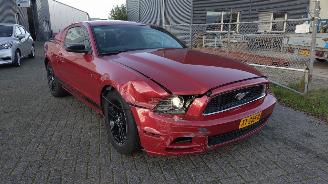
 2012
 petrol
 157.334